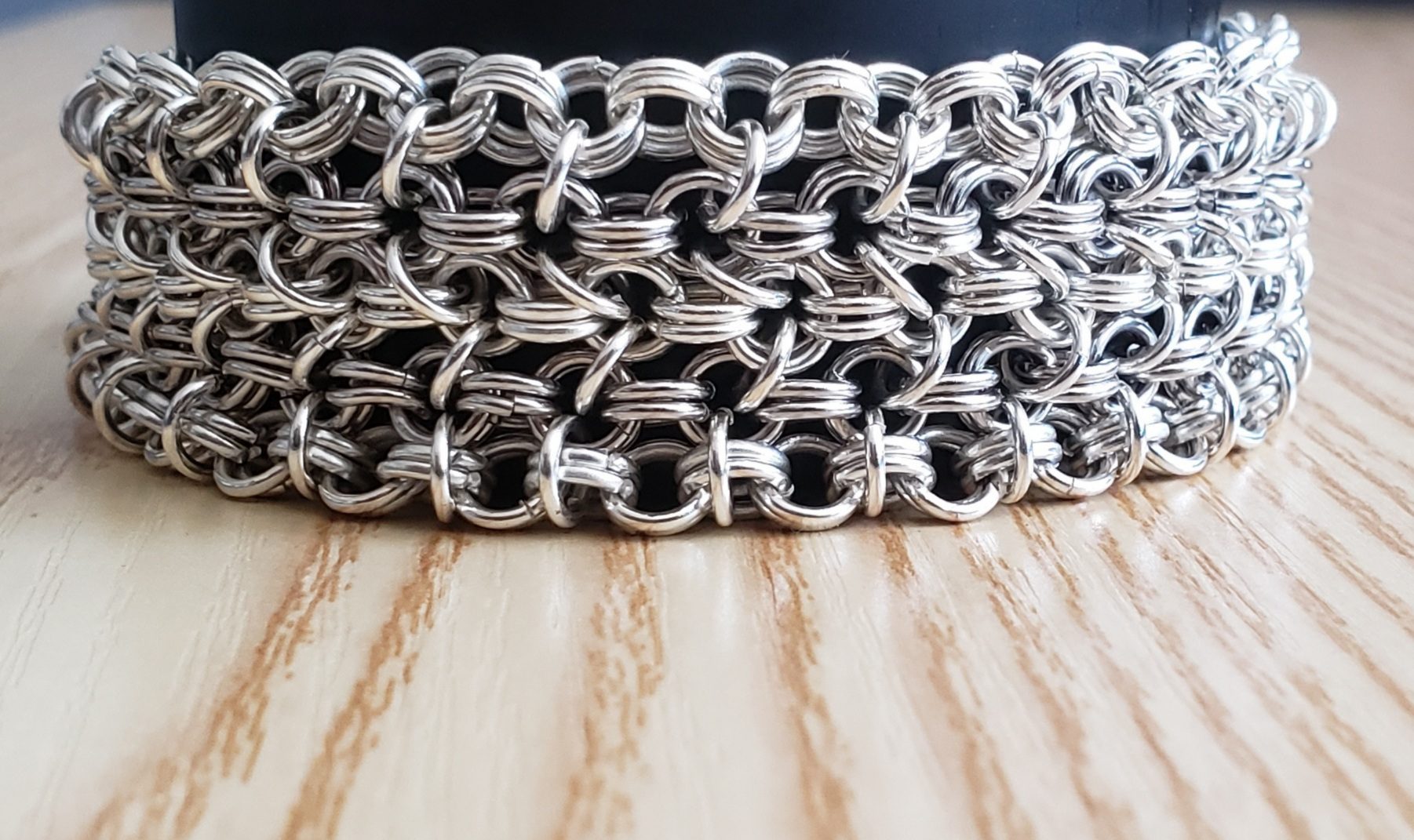
scrapfellow.com – Chainmaille (also spelled chain mail, chainmail, or simply maille) is an ancient craft that involves linking small metal rings together in intricate patterns to create a flexible, mesh-like structure. Historically renowned as protective armor, chainmaille has evolved into a versatile art form used today for jewelry, sculptures, decorative items, and even modern protective gear. Its enduring appeal lies in the combination of functionality, durability, and aesthetic beauty.
A Brief History of Chainmaille
The origins of chainmaille date back to at least the 4th century BCE, with early examples linked to Celtic tribes in Europe. The technique spread widely after the Romans encountered it during battles with Celtic warriors and adopted it as lorica hamata — a flexible shirt of interlinked rings worn by soldiers and gladiators.
Throughout the Middle Ages (roughly 5th–15th centuries), chainmaille became the dominant form of body armor in Europe, especially during the Early Medieval period when plate armor technology was limited. Knights and warriors wore full suits called hauberks (knee-length shirts), coifs (hoods), and chausses (leggings). It provided excellent protection against slashing weapons while allowing mobility.
Chainmaille also appeared independently in other cultures:
- In Japan, as kusari (small rings often sewn onto fabric or leather backing), used by samurai from the 13th century onward.
- In Persia, the Middle East, and Asia, with variations like lighter “zarī” mail in Islamic armies.
By the 14th–16th centuries, firearms and advanced plate armor reduced its battlefield role, but chainmaille persisted in some regions (e.g., Ottoman and Indian armies) into the 19th–20th centuries. Today, it survives in historical reenactments, cosplay, and as protective gear for butchers, divers, or animal handlers.
How Chainmaille Is Made: Weaves and Techniques
Chainmaille is created by connecting metal rings (jump rings) in repeating patterns called weaves. Rings can be butted (ends touching), riveted (historical method for strength), or welded. Modern crafters often use butted or soldered rings for jewelry.
Key factors affecting strength and appearance:
- Aspect Ratio (AR): Ratio of ring inner diameter to wire thickness — crucial for weave success.
- Linkage type: Riveted for historical armor; butted for modern/jewelry.
- Materials: Historically iron or steel; today stainless steel, titanium, silver, gold, anodized aluminum, or colorful niobium.
Common and iconic weaves include:
- European 4-in-1 (E4-1): The classic medieval armor weave — each ring passes through four others. Dense, strong, and flexible; the most popular for beginners and armor replicas.
- Byzantine: A decorative, flowing chain with a “knotted” appearance. Highly flexible and elegant — a favorite for necklaces and bracelets.
- Japanese weaves (e.g., 8-in-2 or Dragonscale): Flat, grid-like patterns with smaller rings, often hexagonal. Historically backed with fabric; modern versions create scaled, intricate sheets.
Hundreds of weaves exist today, including hybrids like Persian, Box, Roundmaille, and Dragonscale — many invented by contemporary artisans.
Modern Applications: Jewelry and Beyond
While armor remains popular in reenactment and LARP communities, chainmaille has exploded as wearable art. Artisans craft stunning pieces in precious metals, creating:
- Bracelets, necklaces, and earrings with delicate Byzantine or Helm weaves.
- Statement pieces like tiaras, belts, or even clothing accents.
- Sculptures, wall hangings, chess sets, and ornaments.
The craft’s flexibility allows for feminine, intricate designs in silver/gold or bold, industrial looks in titanium. Communities like Maille Artisans International League (M.A.I.L.) and Chainmaillers share tutorials, fostering innovation.