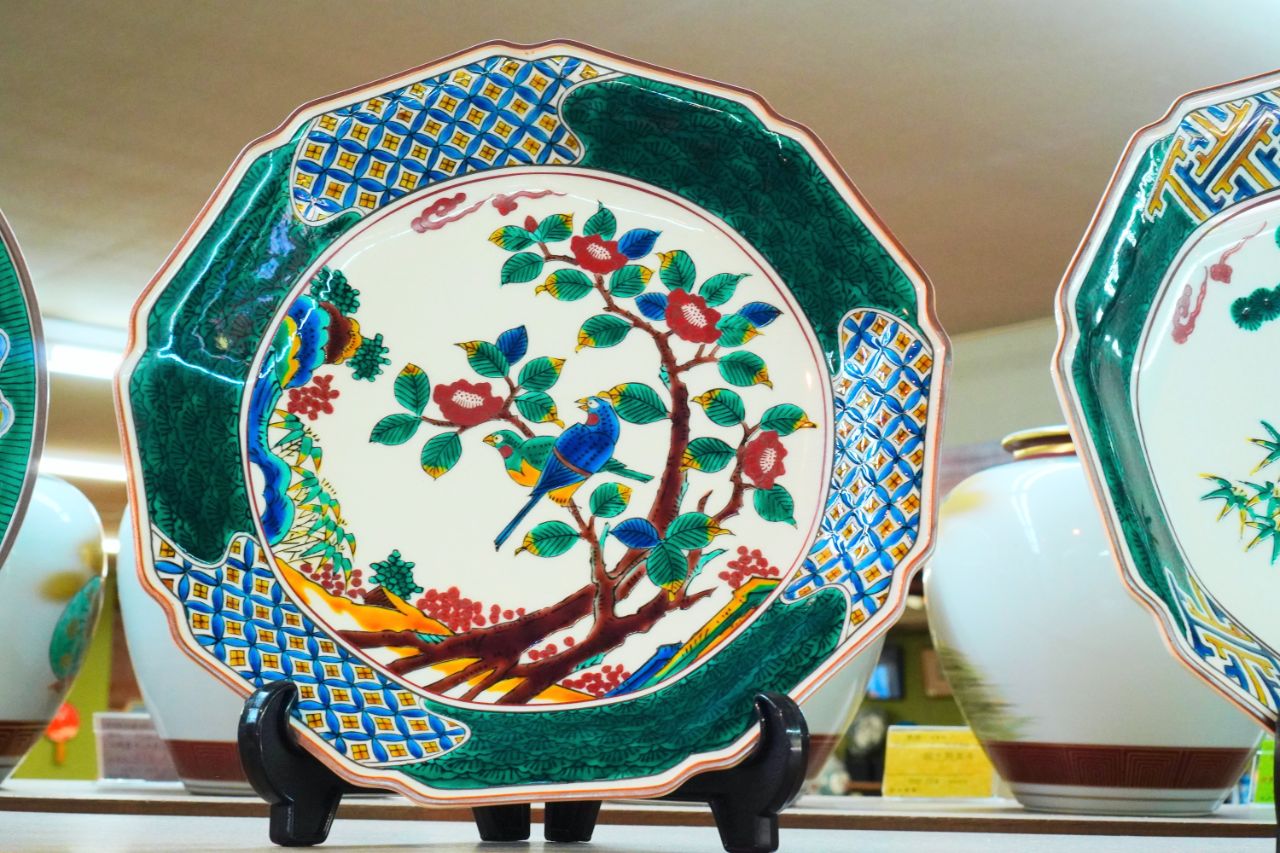
scrapfellow.com – Kutani ware (Kutani-yaki) is one of Japan’s most iconic styles of porcelain, renowned for its bold, vivid colors and intricate overglaze paintings. Originating from the southern region of Ishikawa Prefecture (formerly part of Kaga Province), it embodies a lavish aesthetic that contrasts beautifully with the subtle elegance often associated with Japanese ceramics. With a history spanning over 360 years, Kutani ware continues to captivate collectors and enthusiasts worldwide for its dynamic designs and technical mastery.
A Rich History: From Ko-Kutani to Modern Revival
The story of Kutani ware begins around 1655 during the early Edo period, when the Maeda clan (lords of the Kaga domain) discovered high-quality porcelain stone in Kutani village. They sent artisan Saijirō Gotō to study techniques in Arita (famous for Imari ware), leading to the establishment of the first kilns.
This initial phase produced Ko-Kutani (“Old Kutani”), characterized by lavish, abstract designs in deep greens, yellows, purples, and blues—often without red. Production mysteriously ceased around 1730, possibly due to resource shortages or economic issues.
In the early 19th century, production revived as Saikō-Kutani. New kilns like Yoshidaya (focusing on four-color designs) and others introduced styles such as aka-e (red-dominated fine painting) and gold embellishments. By the Meiji era (late 1800s), Kutani ware gained international fame at expositions like the 1873 Vienna World Expo, often exported as “Japan Kutani.”
Today, hundreds of kilns in areas like Komatsu, Kaga, and Nomi continue the tradition, blending historical techniques with contemporary innovation.
Distinctive Characteristics and Styles
Kutani ware stands out for its overglaze enamel painting (applied after the initial firing and refired at lower temperatures), allowing for vibrant, translucent colors. The signature Kutani Gosai (five colors)—green (or blue), yellow, purple, red, and deep blue—creates bold, immersive designs covering much of the surface.
Common motifs include landscapes, birds, flowers, geometric patterns, and figures, often with fine calligraphy or gold/silver accents. Key historical styles include:
- Ko-Kutani/Ao-de: Dominated by greenish-blue tones with abstract, dense patterns.
- Yoshidaya: Elegant four-color schemes (no red) reviving old traditions.
- Aka-e: Intricate red paintings with delicate details.
- Shoza: Gold and red combinations for luxurious effect.
- Modern variations: Hanazume (flower-filled), saiji (fine calligraphy), and jewel-like glazes.
Kutani Ware Today
In contemporary times, artists like Living National Treasures (e.g., Tokuda Yasokichi III for enamel work) push boundaries while honoring tradition. Kutani ware is designated as a traditional Japanese craft, with pieces ranging from everyday items to high-art collectibles.
Its bold colors are said to reflect the desire for vibrancy amid Ishikawa’s long, gray winters—a perfect antidote to subtlety.
Whether as functional tableware or decorative art, Kutani ware brings joy and energy to any space. Visiting Ishikawa’s kilns or museums offers a chance to experience this living heritage firsthand. If you’re drawn to colorful, expressive ceramics, Kutani ware is a timeless treasure!